Morphine vs. PENG Block: Which Provides Better Hip Surgery Pain Control?
Managing pain after total hip arthroplasty (THA) has long relied [...]
Managing pain after total hip arthroplasty (THA) has long relied [...]
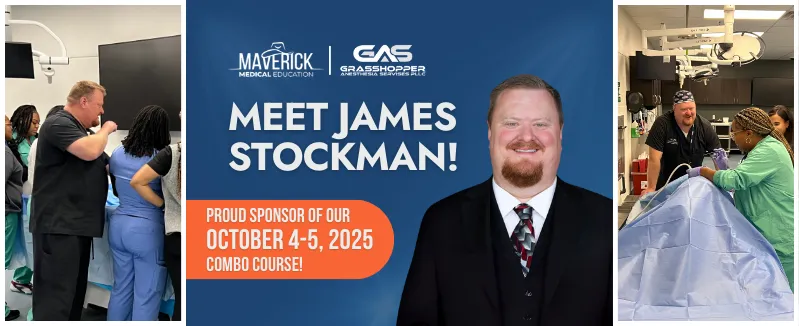
Maverick Medical Education is proud to spotlight James Stockman, MSNA, [...]
Grasshopper Anesthesia Sponsorship As our commitment to innovative and revolutionary [...]
Enhancing Regional Anesthesia Training with Maverick Medical Education's Visual Instruction [...]
We are already in a new year and ready to [...]
Every curriculum and course is unique, especially when it comes [...]
Maverick Medical Education is proud to be entering another year [...]
Maverick Medical Education’s courses are deliberately thought out to provide the best education for those who enroll with us. The flipped classroom model that gives lecture instruction ahead of time, through modules accessible from any internet connected device, primes the lab time where students will get hands-on training from our esteemed Maverick Instructors. Perfecting these skills takes time and our instructors are passionate about passing their knowledge and training to each new course.
Breast cancer, unfortunately, is more prevalent and impacting more women every year. While every patient will choose, with their medical team, a different course of action for treatment, many are choosing a surgical option to reduce the risk of future issues. With this emotional decision comes a number of concerns, including the typical post-surgical pain concerns. Maverick Medical Education teaches courses that help provide pain treatment and reduction for patients of all types and has seen an improvement in analgesia with the use of regional anesthesia.
Anesthesia techniques extend far beyond the obvious of numbing an area to pain in order for a medical procedure to take place for the patient. From pre and post-operative care to assisting in healing long term there are a number of ways that anesthesia can benefit patients facing a number of medical concerns. There is a growing amount of research that shows regional anesthesia can have a positive impact on, not only care for cancer treatment patients, but on survival rates as well.

© Copyright 2025-2026 Maverick Medical Education. All Rights Reserved. Website design by Impact Group Marketing. Privacy Policy | Terms of Use