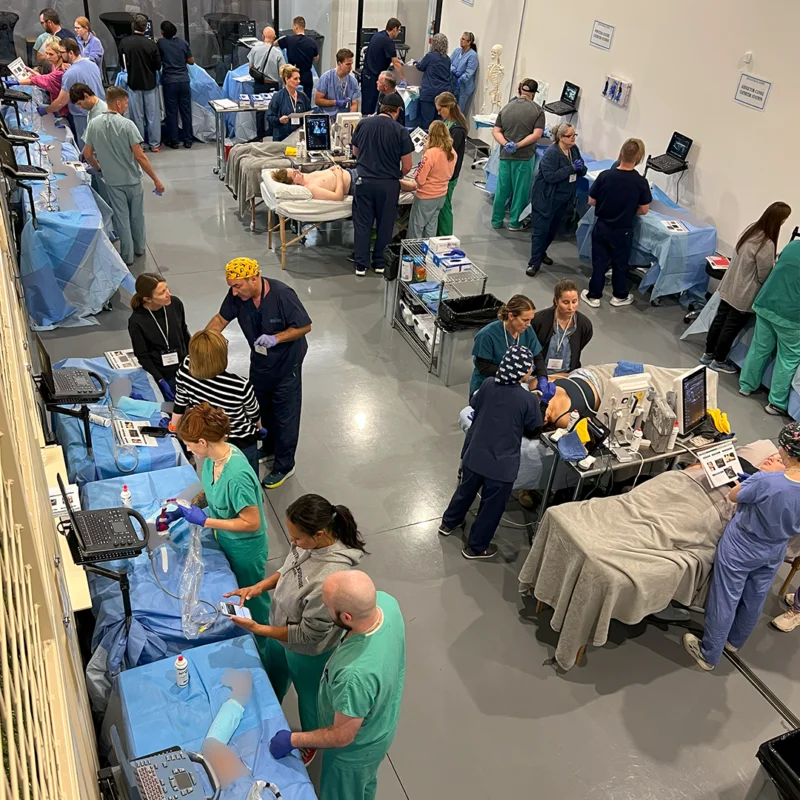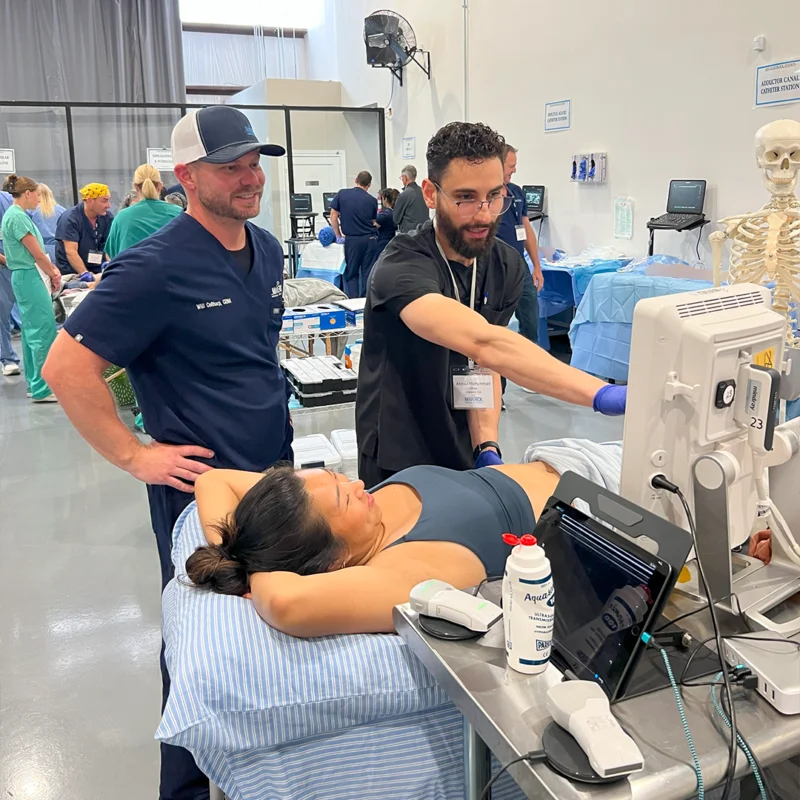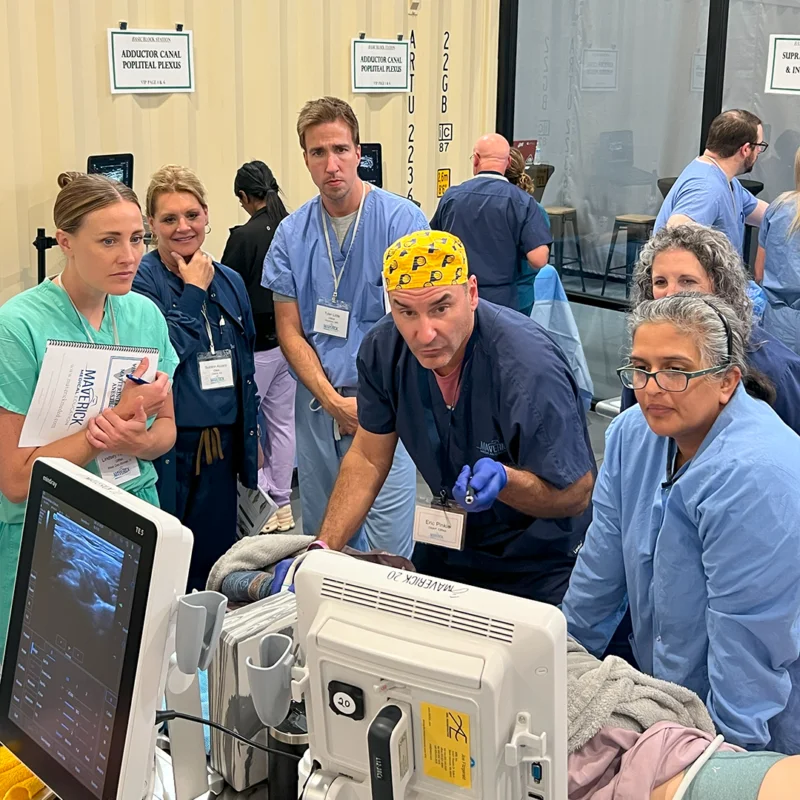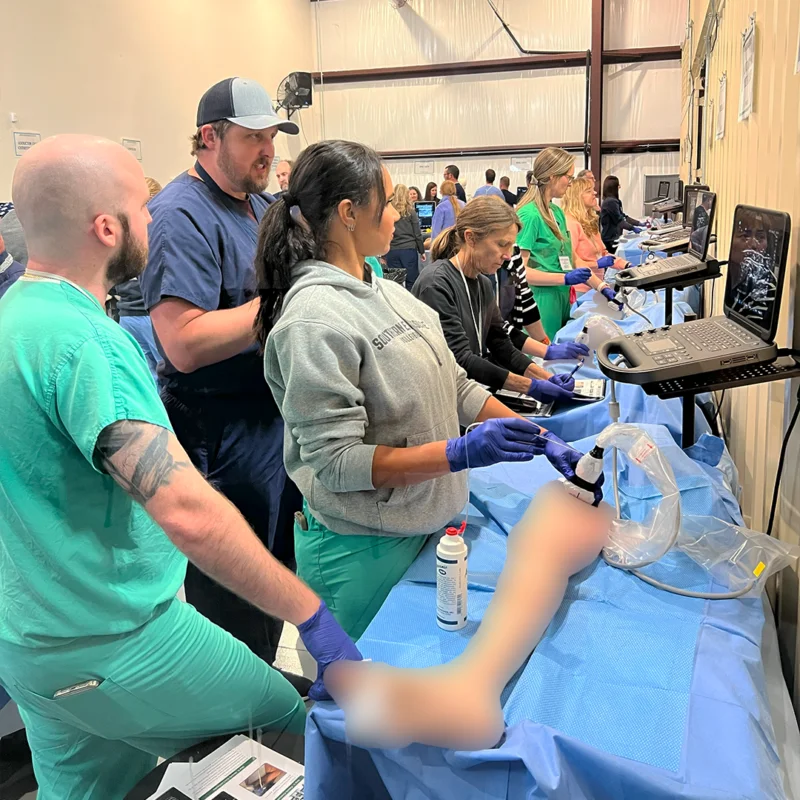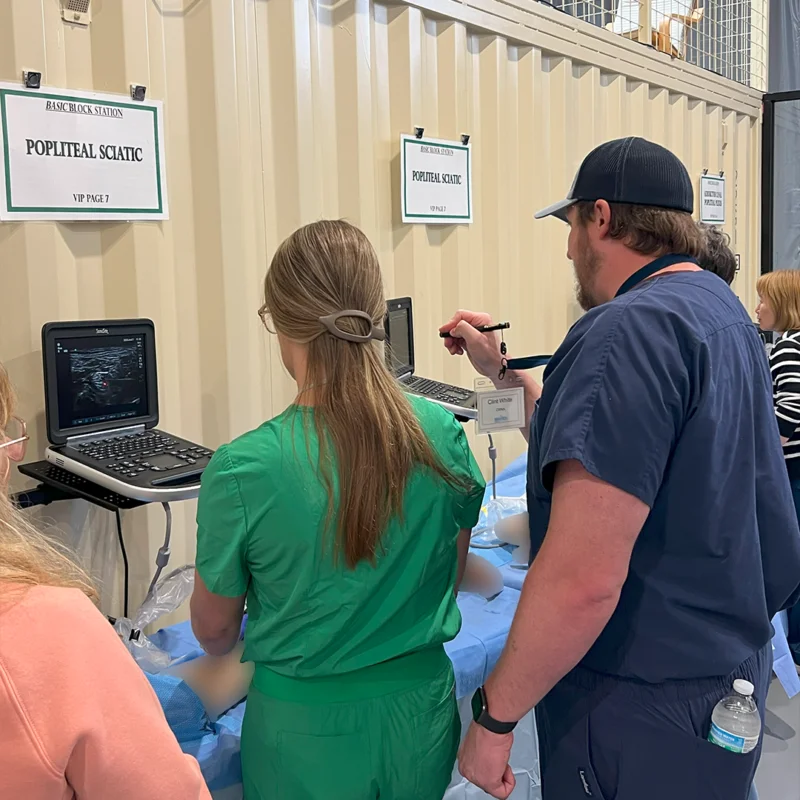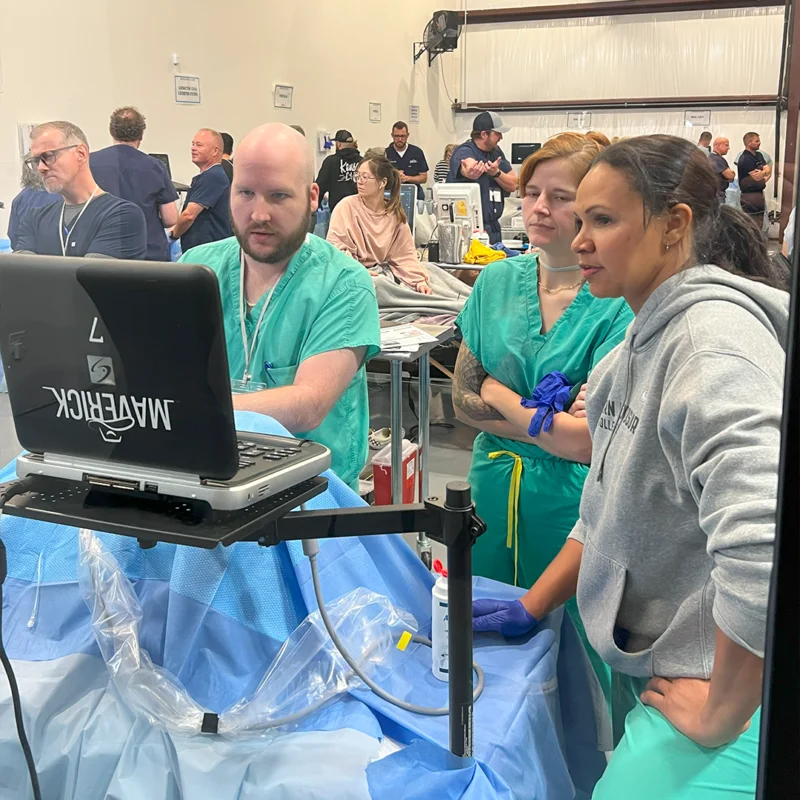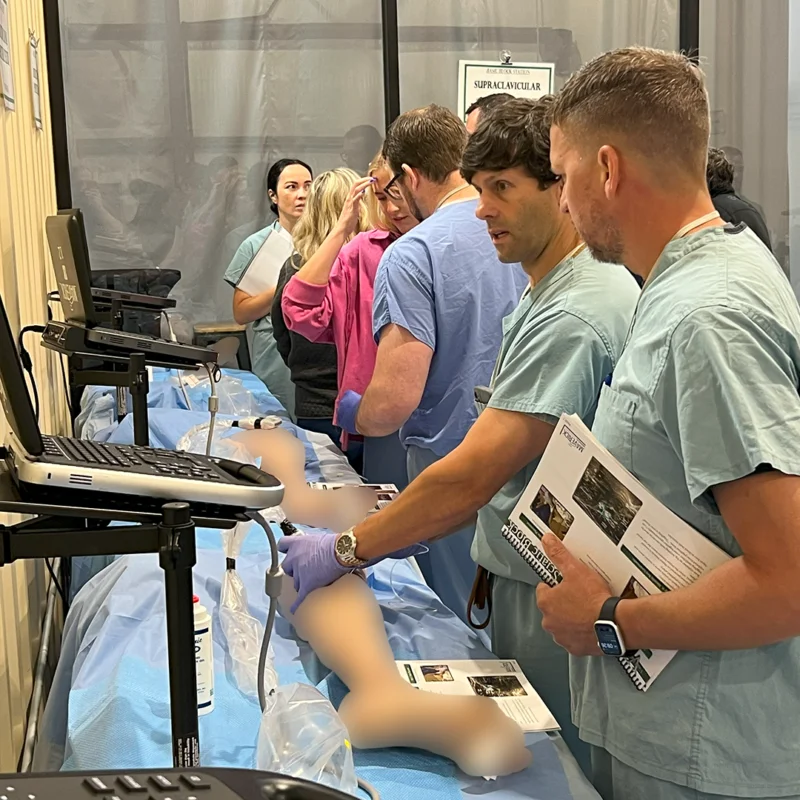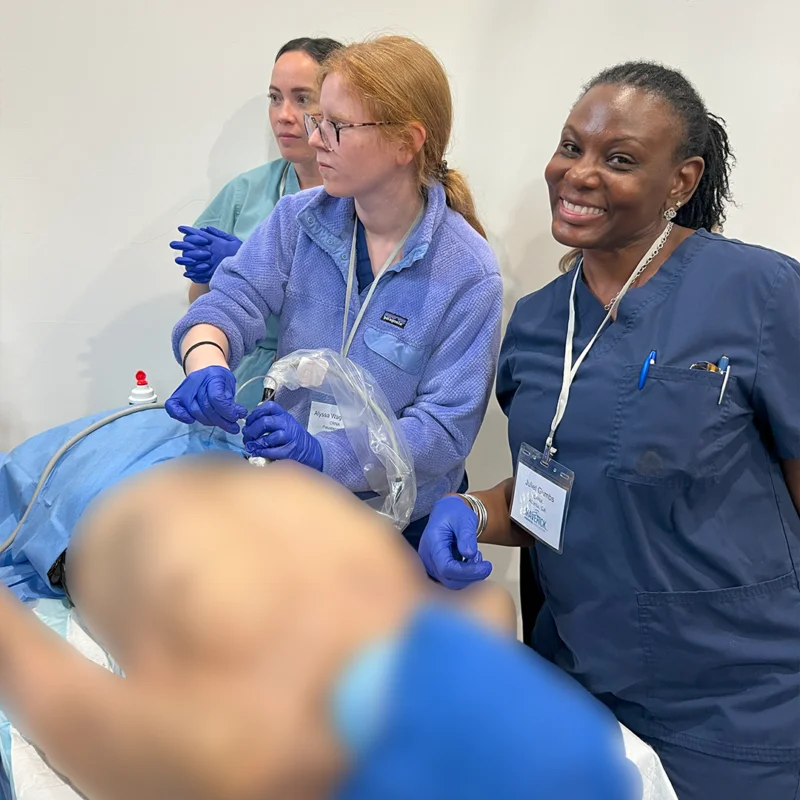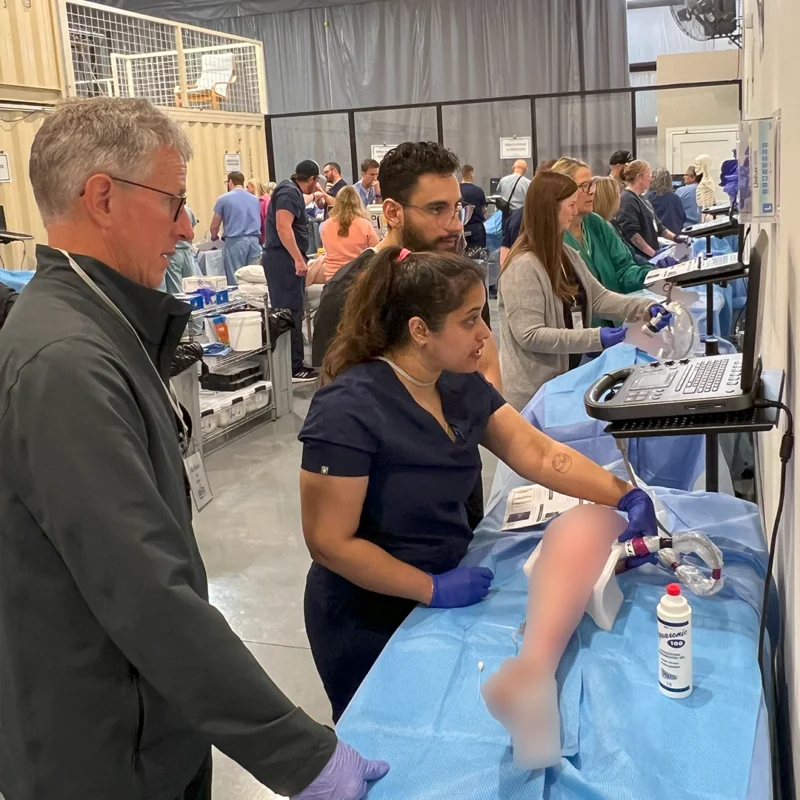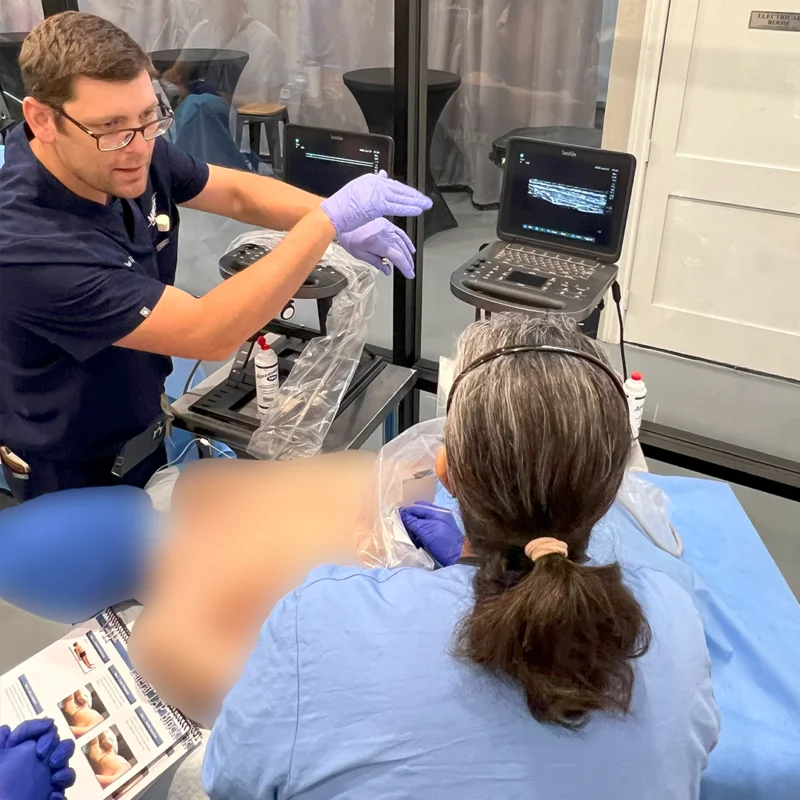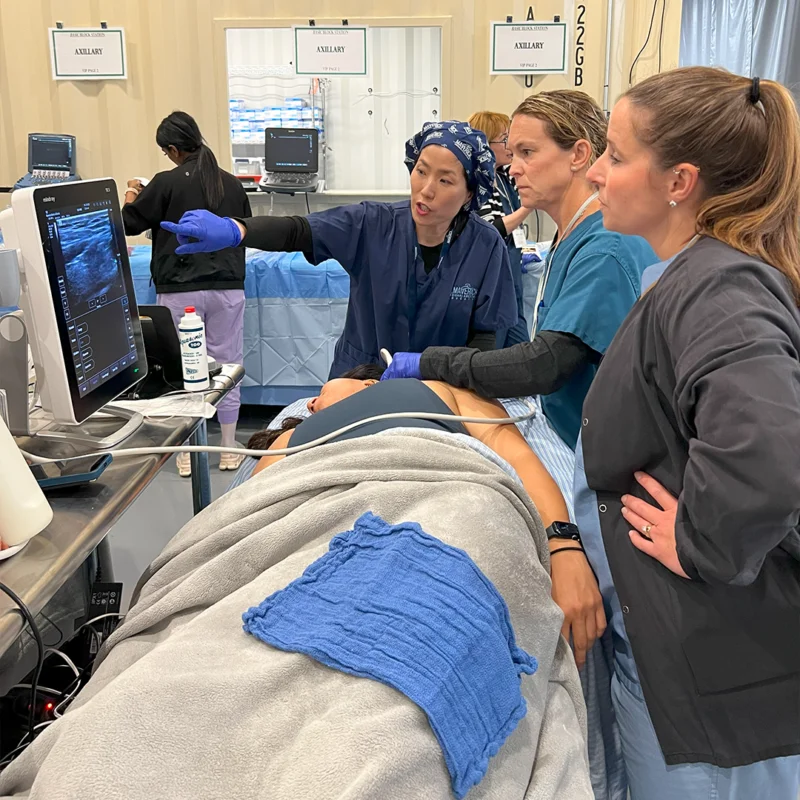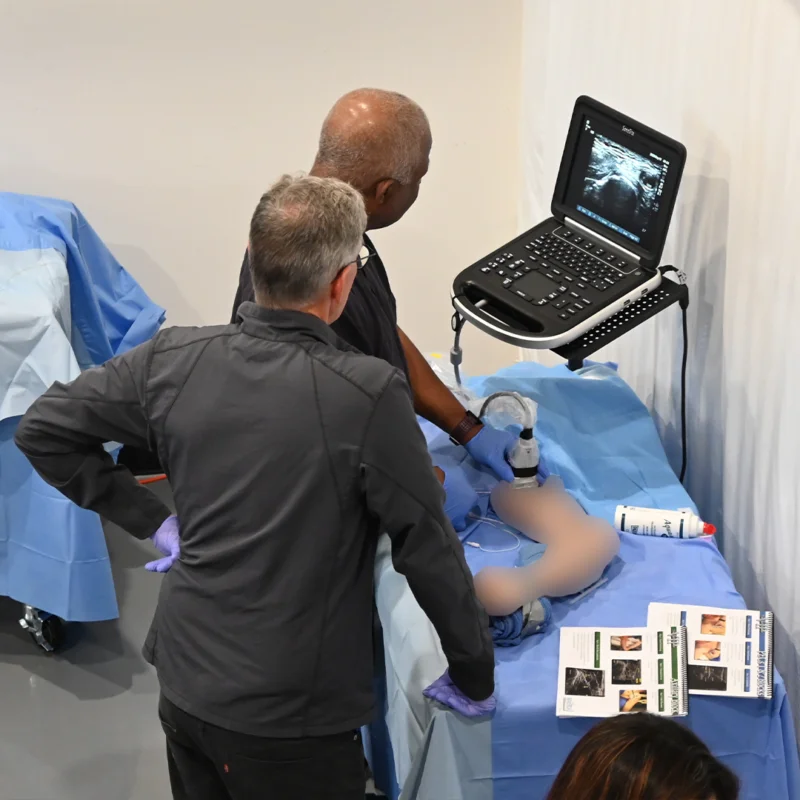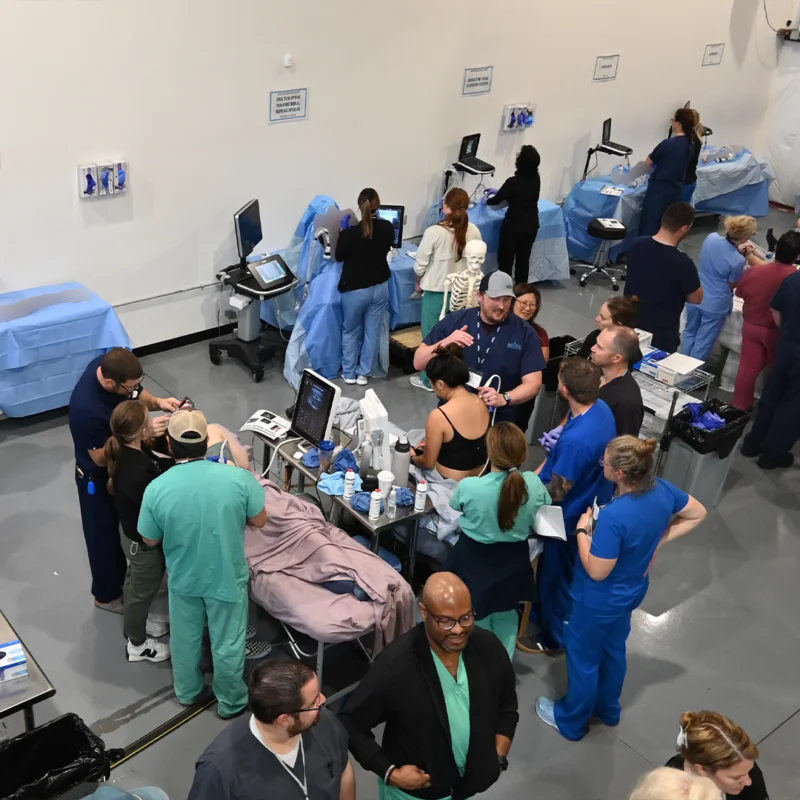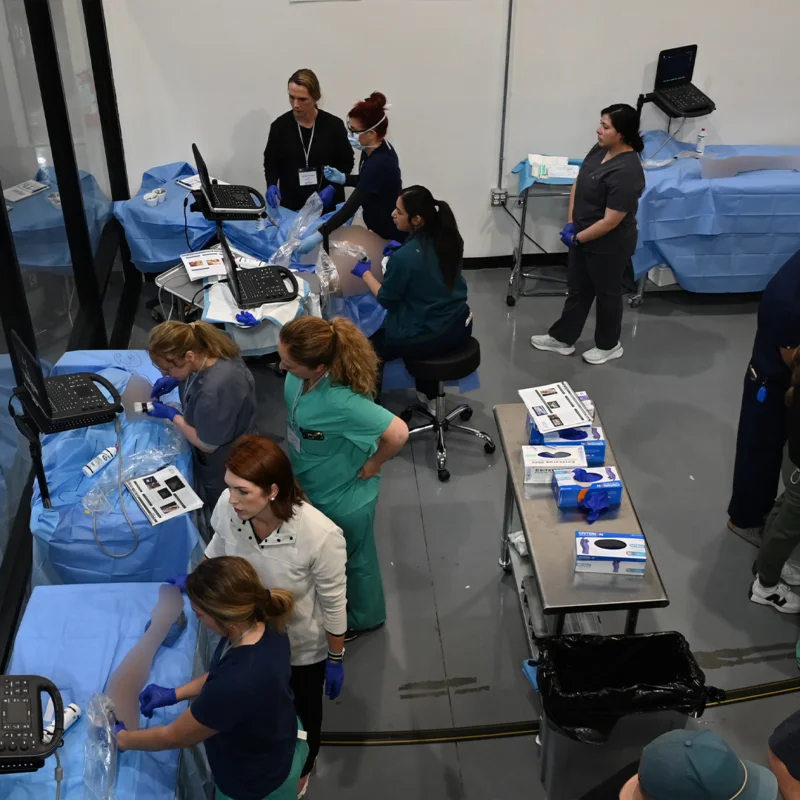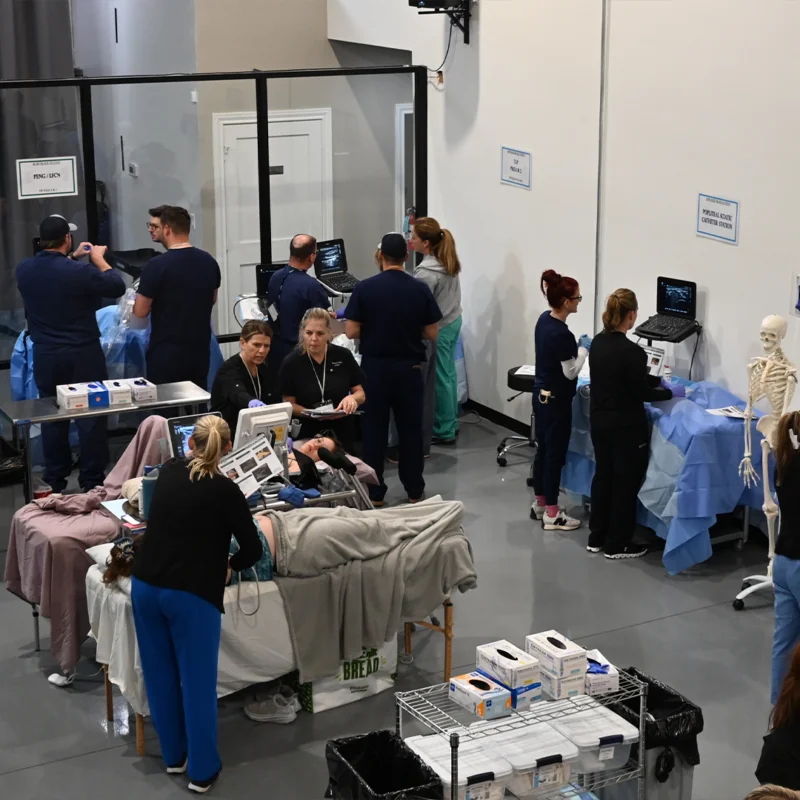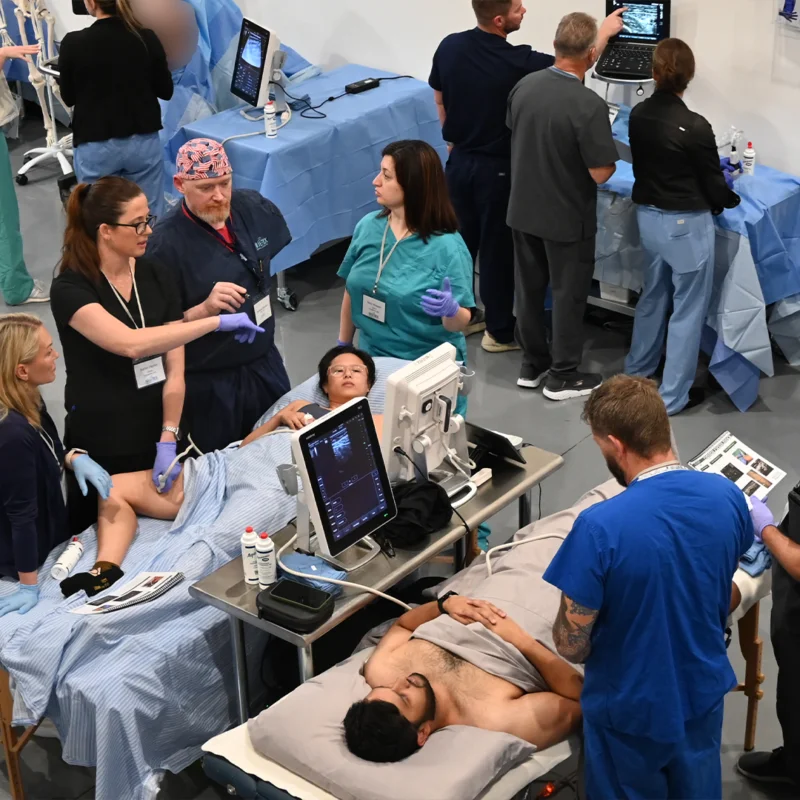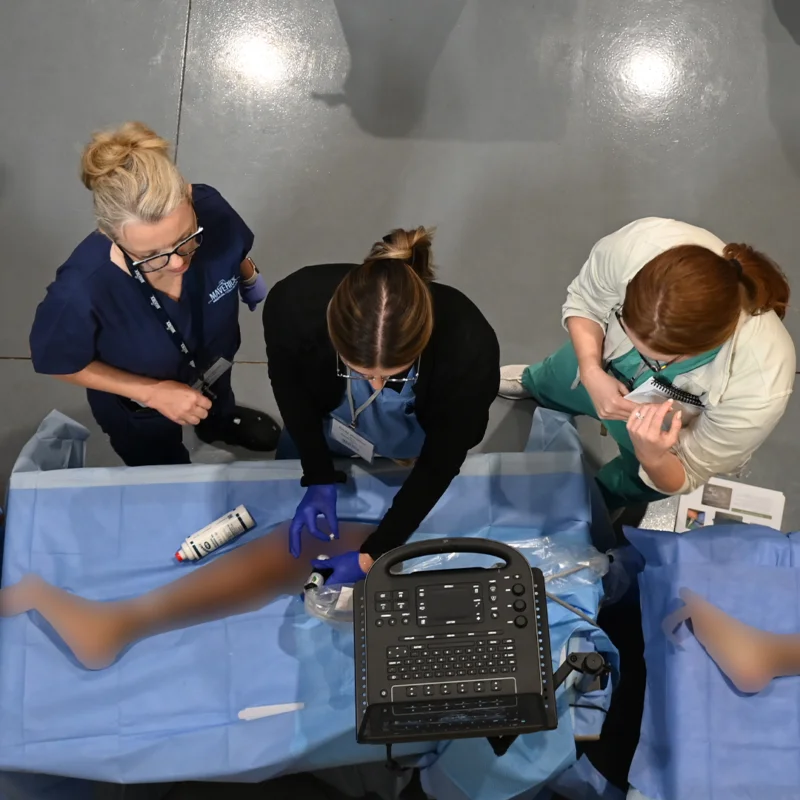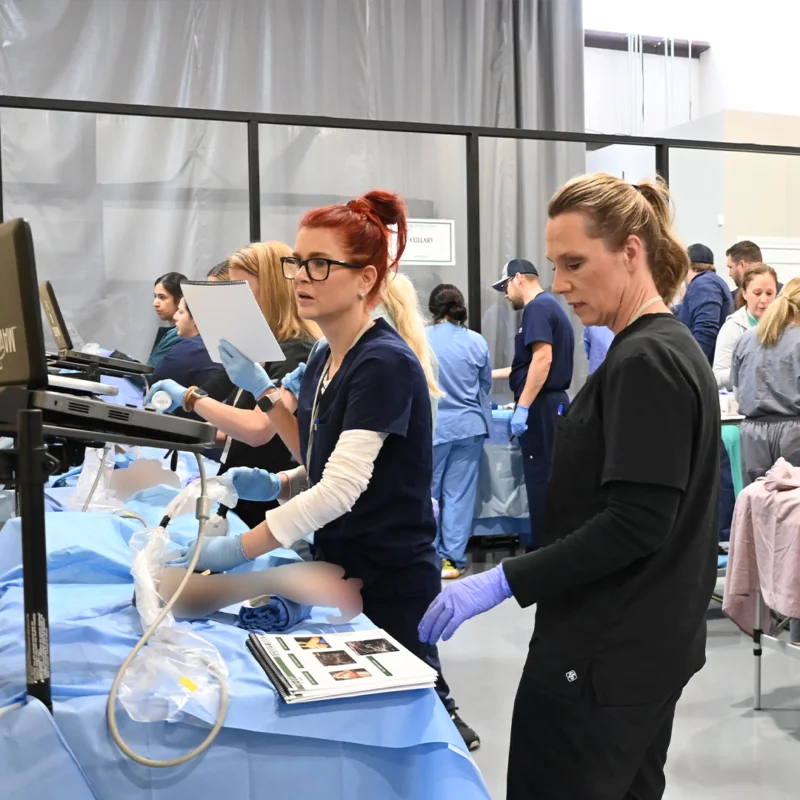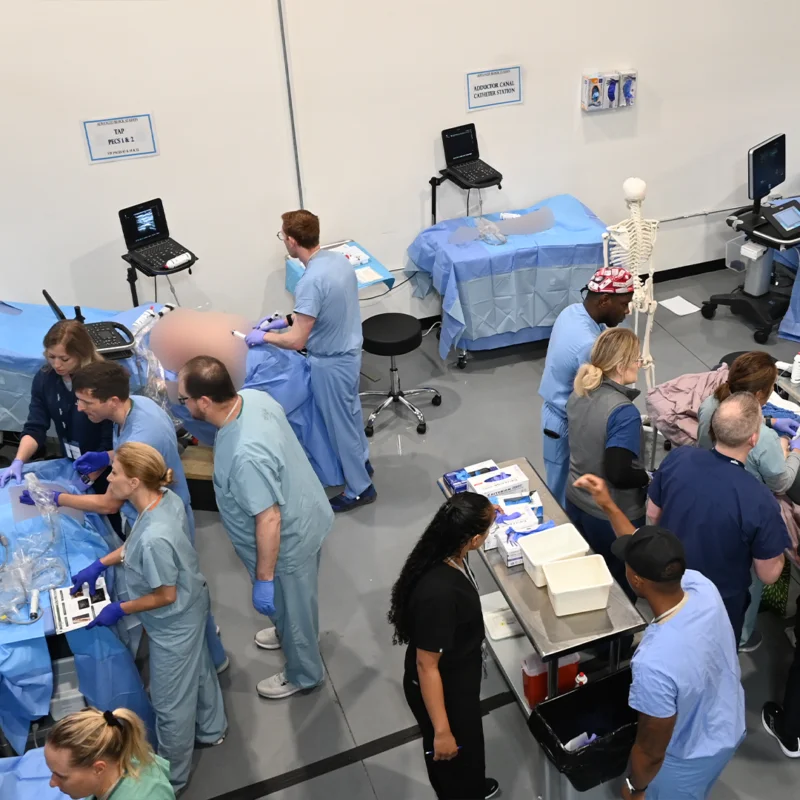
The Mastering Regional Anesthesia Techniques course is designed for healthcare professionals seeking to master the skills of regional anesthesia. The curriculum integrates both our former Regional Anesthesia Essential Techniques and Advanced Techniques courses, offering a more comprehensive education on ultrasound guided nerve blocks.  Through the combination of online didactic modules, hands-on practice with cadavers utilizing Maverick’s patented pulsatile system, and live models, participants will refine their skills under the guidance of experienced instructors providing a well-rounded and immersive learning experience.
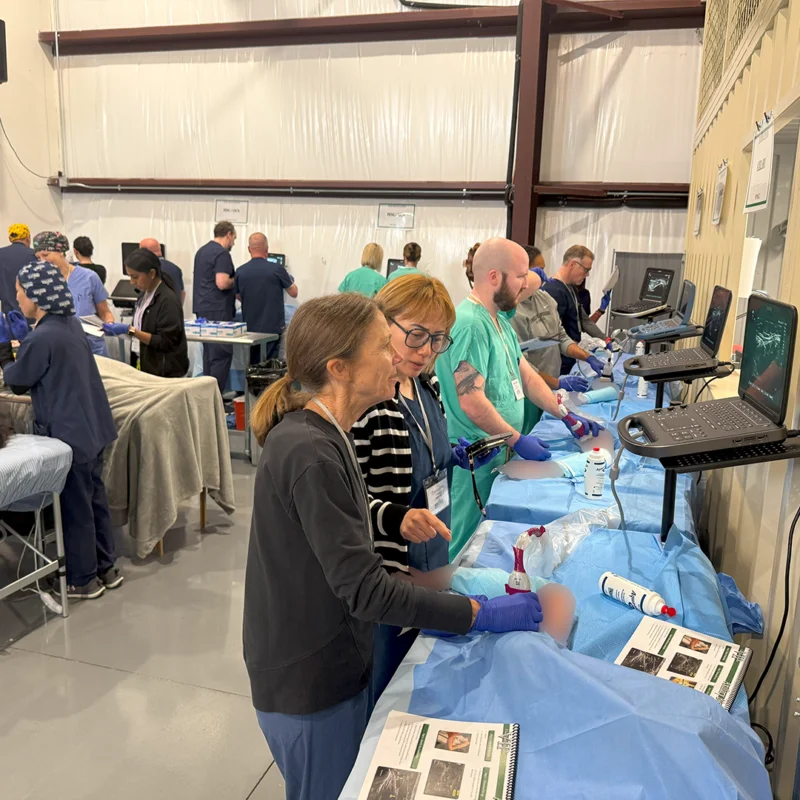
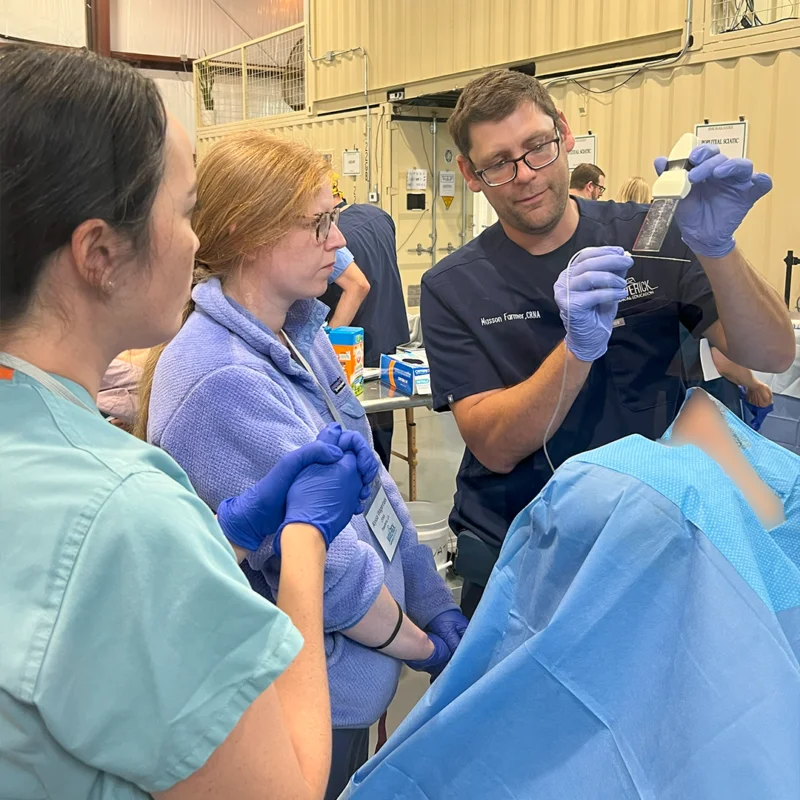
Gain the Most Confidence in our Life-Like Pulsatile Cadaver Labs

Click the drop downs below to explore the components of the course!

This course is not a typical “death-by-PowerPoint” lecture. The modules are filled with interactive presentations, ultrasound videos, pre & post-tests, knowledge checks, and landmark target practice activities. These modules are asynchronous allowing participants to take the course at their own pace and at their own location.

The modules were developed by experienced and currently practicing CRNAs, education experts in pedagogy from Texas A&M University, and instructional designers.

*Students must complete the online didactic modules before attending the hands-on cadaver lab.

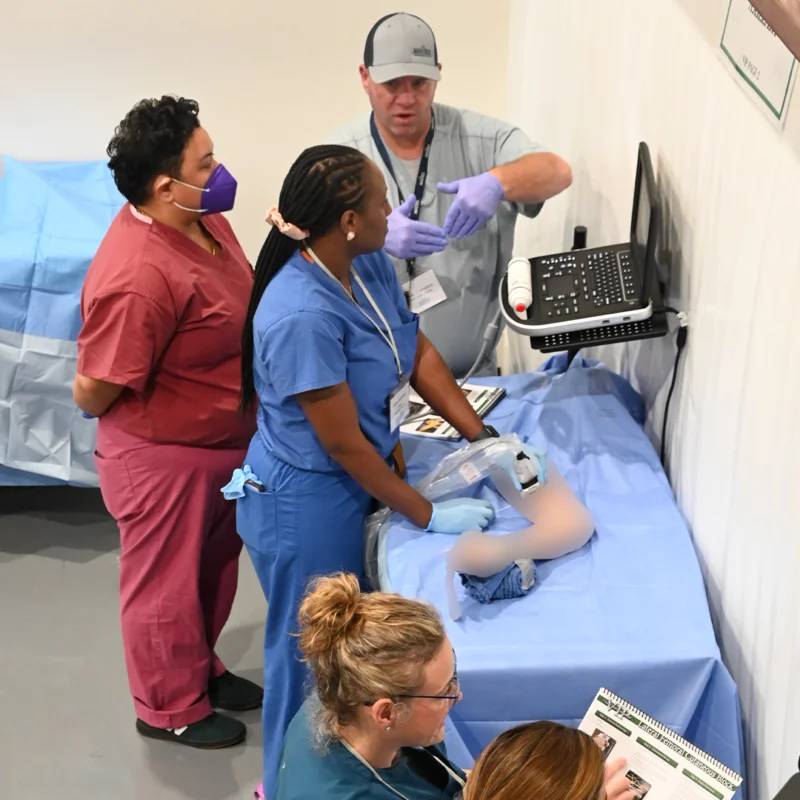
Over two days, students apply lessons from the online didactic modules to experiential training exercises in a clinical environment, developing confidence and proficiency in administering regional nerve blocks. Students train with life-like pulsatile cadavers to maximize realism when performing blocks and using ultrasound probes.

Students use live human models to develop their skills in identifying landmarks for both peripheral nerve stimulation and ultrasound. They also work with cadavers to practice advanced needling and demonstrate proficiency in all blocks of training.

Adductor Canal    Axillary    Erector Spinae    Genicular    Interscalene    Paravertebral    PECs 1&2    PENG/LFCN    Popliteal Plexus
Popliteal Sciatic    Quadratus Lumborum (live model scanning only)    Supraclavicular    Suprascapular    TAP    Catheter Placement/Management

Mastering Regional Anesthesia Techniques

Complete Course

COURSE FEES

  • $2,600.00

CE’s EARNED: 38 Total

Online Didactic Module CEs:
22 AANA MAC Ed CE credits

Hands-On Cadaver Lab CEs:
16 AANA MAC Ed CE credits

HANDS-ON LAB SCHEDULE

SATURDAY LAB SCHEDULE
  • 7:30am-8:00am: Coffee & Breakfast Served (Provided)
  • 8:00am-9:00am: Orientation with Breakfast
  • 9:00am-12:00pm: Hands-on Cadaver & Live Model Stations
  • 12:00pm-1:00pm: Q&A with Lunch (Provided)
  • 1:00pm-5:00pm: Hands-on Cadaver & Live Model Stations
SUNDAY LAB SCHEDULE
  • 7:30am-8:00am: Coffee & Breakfast Served (Provided)
  • 8:00am-8:30am: Review with Breakfast
  • 8:30am-12:00pm: Hands-on Cadaver & Live Model Stations
  • 12:00pm-1:00pm: Q&A with Lunch (Provided)
  • 1:00pm-3:00pm: Open Cadaver Lab

Basic Techniques Components

In the foundational portion of the course, you’ll focus on the core skills necessary for safe and effective regional anesthesia. Key areas of learning include:

  • Ultrasound-guided nerve block techniques
  • Anatomical landmarks for regional anesthesia
  • Peripheral nerve blocks
  • Safety protocols and complication management

The foundation is designed for practitioners new to regional anesthesia or those looking to strengthen their established skills. You will engage in hands-on learning with expert instructors, gaining confidence in executing the following basic nerve blocks:

  • Axillary
  • Adductor Canal
  • Genicular
  • Interscalene
  • PENG/LFCN
  • Popliteal Plexus
  • Popliteal Sciatic
  • Supraclavicular

Advanced Techniques Components

Building on the basic foundational knowledge, the advanced portion of the course takes your skills further with more complex blocks and specialized techniques. You will:

  • Learn advanced ultrasound-guided techniques for deeper and more challenging nerve blocks.
  • Explore continuous catheter techniques for longer-term pain management.
  • Delve into new and emerging methods in regional anesthesia.
  • Gain insight into advanced clinical decision-making and problem-solving in challenging scenarios.

This segment is designed for practitioners more experienced in regional anesthesia or those looking to strengthen their basic skills. You will engage in hands-on learning with expert instructors, gaining confidence in executing the following advanced plane nerve blocks:

  • Erector Spinae
  • Paravertebral
  • PECs 1&2
  • Quadratus Lumborum (live model scanning only)
  • Suprascapular
  • TAP
  • Catheter Placement

All blocks will be taught during this 2-day course and participants have the option to perform nerve blocks specific to their practice’s needs.  It is not recommended that beginners to regional anesthesia attempt the more advanced nerve blocks until comfortable with the foundational blocks. This course may be taken multiple times to complete the full range of blocks taught.

A 20% discount is given to all returning attendees of this course.

Mastering Course Testimonials

Excellent course. Would highly recommend to my colleagues. Instructors were very helpful and knowledgeable. Was able to pick up quite a few new techniques on both basic and advanced blocks to improve my image and needling quality.

Lauren, CRNA, Oregon

Best block education I have received in my 14 years of practice. I am more familiar and confident with the use of US than I have ever felt. I look forward to participating in future Maverick classes.

Michele, CRNA, Kentucky

Of all the courses in regional anesthesia in regional anesthesia that I have attended this is hands-down the best course I’ve been to. The hands-on experience you receive is not available in any other course I know of. Very well put together!

Greg, MD, Texas

Thank you so much for providing this opportunity for SRNAs as well. This course is essential knowledge for practice. I am so thankful for this opportunity.

Toyanna, SRNA, South Carolina

Great Lab! I am a new grad CRNA that felt my block training was weak in school! This is a great outlet for practicing and gaining confidence in ultrasound and block skills!

Margaret, SRNA, North Dakota

David and his fellow instructors had knowledge far beyond my expectations. The course was fascinating, engaging, and heavily hands on in the lab. The pearls and encouragement offered made me energized to renew my practice of anesthesia even this late in my career. I recommend this course without hesitation to any CRNA considering adding regional to their practice.

Dan, CRNA, North Carolina

Even if you feel like you provide excellent regional anesthesia to your patients, there is so much in this course that can IMPROVE your practice. I can’t wait to implement some changes to provide better relief to my patients.

Easton, CRNA, Ohio

I am so proud of my CRNA colleagues for putting together such a comprehensive course including hands on experience. When I went to anesthesia school, U/S use for practice was just starting and I have to do continuing education to stay on top of the advancement in care/technology. I appreciate the abundance of information supplied in the Maverick course, I know that after attending the hands on portion, I will have the knowledge and confidence to advance my anesthesia practice. THANK YOU!

Jennifer, CRNA, Colorado

As a new grad, I didn’t get as much practice with PNBs as I would like. After taking this course I feel much more confident and excited to administer safe and effective PNBs to my patients.

Margaret, CRNA, Pennsylvania

Maybe it is possible to teach an old dog new tricks! I learned with nerve stim only a looonnngg time ago and my practice straight out of school did not allow/encourage CRNAs to utilize regional due to residency learning so I missed the whole ultrasound and regional boat. I thought I never would care about poking people with needles until I came to a new job with new opportunities and Maverick has helped me learn that I too can do this stuff those young, new whippersnapper CRNAs are doing! And it is FUN! But more importantly, satisfying for the patients and a great new adjunct to add to my armamentarium.

Sara, CRNA, Oregon

Maverick has been a great online module course to supplement regional anesthesia learning while in CRNA school. The benefits to the student scholarship go beyond student life and affect our future careers as CRNAs. Not to mention this will always be a course we can take again if we need a refresher.

Chris, SRNA, Pennsylvania

Maverick was very beneficial. It exemplifies what a regional anesthesia program should include in an anesthesia program. Anyone who takes this course will be glad they did and be able to utilize pertinent information and techniques for their patients providing the best anesthesia care possible. The instructors were brilliant And very personable and I couldn’t. have met my objectives without them.

Arkeylla, CRNA, Ohio

I retake this course every two years. Each time I take it, something else pops out at me that I didn’t catch the time before. It keeps me on top of my block skills and helps me to revisit blocks that I don’t get to perform regularly. Maverick is an integral part of my educational arsenal. Thanks Maverick

David, CRNA, Texas

This was a great course well worth the money. It advanced my skills and regional and blocks. The instructors are very knowledgeable and very helpful for the entire weekend.

Jason, CRNA, Indiana

Maverick was outstanding. It provided me the opportunity to be hands on with pulsatile cadavers with the best learning experience. Everyone was so knowledgeable and patient while trying to help me master my ultrasound skills.
Tracey, CRNA, Iowa

This course exceeded my expectations! I’m excited to go back to work with the skills that I was able to learn and refine. The instructors were all wonderful and had a wealth of knowledge and experience to share with us and they were clearly passionate about teaching. It was also helpful to have many stations to either scan real live models or practice scanning and needling on the cadavers. Highly recommend!

Ahmad, CRNA, California

I greatly appreciate the guidance and hand-holding from the cadre of knowledgeable and friendly proctors! Let’s not forget that the wonderful admin staff… They made my time comfortable and stress-free! Kudos

Remi, CRNA, Vermont

I work in a setting where we not only perform blocks independently, but also are directing and teaching students. Admittedly, I came to this course struggling to even find the needle in the beam. However, I left feeling competent in my abilities to perform the basic blocks that we are performing at our hospital. I will definitely be back and I recommend this course to anyone who’s performing blocks, even if they feel efficient!

Meghan, CRNA, Kentucky

Easily the best nerve block course that I’ve attended. While I do blocks at my current practice, my eyes were opened to how much I didn’t know in regards to regional anesthesia. Looking forward to attending more of the Maverick courses to expand my knowledge.

Corey, CRNA, Arkansas

I had such a great experience with this course. As a student, the hands-on practice really helped some of the concepts click. The instructors were amazing, and everyone was so supportive of us as students. They took the time to share tips, tricks, and real-world advice, which definitely made me even more excited to do more regional anesthesia.

Kayla, SRNA, Texas

Mastering Regional Anesthesia Techniques

Online-Only Didactic Modules

COURSE FEES

  • $1,200.00

CE’s EARNED: 22 Total

Online Didactic Module CEs:
22 AANA MAC Ed CE credits

IMPORTANT INFORMATION

  • The Online-Only Didactic Modules are asynchronous and can be completed anytime within a year of purchasing.

CAN I ATTEND A HANDS-ON LAB LATER?

Yes! If you complete your Online-Only course within one year of purchasing and want to test your skills on our cadavers or live models in a hands-on lab, click the button to join a lab. We will schedule you for a lab that has available seats and we will invoice $1,600.00 to attend.

Note: The online-only course does not include a hands-on cadaver lab, which is included in our “complete course” listed above.

Basic Techniques Components

In the foundational portion of the course, you’ll focus on the core skills necessary for safe and effective regional anesthesia. Key areas of learning include:

  • Ultrasound-guided nerve block techniques
  • Anatomical landmarks for regional anesthesia
  • Peripheral nerve blocks
  • Safety protocols and complication management

The foundation is designed for practitioners new to regional anesthesia or those looking to strengthen their established skills. This foundational content explains how to perform the following basic nerve blocks:

  • Axillary
  • Adductor Canal
  • Genicular
  • Interscalene
  • PENG/LFCN
  • Popliteal Plexus
  • Popliteal Sciatic
  • Supraclavicular

Advanced Techniques Components

Building on the basic foundational knowledge, the advanced portion of the course takes your skills further with more complex blocks and specialized techniques. You will:

  • Learn advanced ultrasound-guided techniques for deeper and more challenging nerve blocks.
  • Explore continuous catheter techniques for longer-term pain management.
  • Delve into new and emerging methods in regional anesthesia.
  • Gain insight into advanced clinical decision-making and problem-solving in challenging scenarios.

This segment is designed for practitioners more experienced in regional anesthesia or those looking to strengthen their basic skills. This advanced content explains how to perform the following basic nerve blocks:

  • Erector Spinae
  • Paravertebral
  • PECs 1&2
  • Quadratus Lumborum
  • Suprascapular
  • TAP
  • Catheter Placement

Upcoming Course Dates

Mastering Regional Anesthesia Techniques

June 13, 2026 @ 8:00 am - June 14, 2026 @ 5:00 pm

Mastering Regional Anesthesia Techniques

July 11, 2026 @ 8:00 am - July 12, 2026 @ 5:00 pm

Mastering Regional Anesthesia Techniques

September 19, 2026 @ 8:00 am - September 20, 2026 @ 5:00 pm

Mastering Regional Anesthesia Techniques

November 14, 2026 @ 8:00 am - November 15, 2026 @ 5:00 pm

Mastering Regional Anesthesia Techniques

December 12, 2026 @ 8:00 am - December 13, 2026 @ 5:00 pm