
Managing pain after total hip arthroplasty (THA) has long relied on intrathecal (IT) morphine, but this approach often carries risks, including side effects and potential motor impairment. A recent randomized, placebo-controlled study explored whether the pericapsular nerve group (PENG) block could provide an equally effective alternative.
Study Overview
- Participants: 60 patients undergoing hip replacement surgery with spinal anesthesia.
- Interventions: Half received a PENG block (local anesthetic near the hip joint), while the other half were given IT morphine.
- Measurements: Pain at rest, pain during hip movement, and additional opioid requirements within the first 48 hours.
What the Results Showed
- Pain control was equally effective in both groups.
- Patients who received a PENG block required slightly less additional morphine.
- Importantly, the PENG block did not increase muscle weakness compared to IT morphine.
Why This Matters for Providers
The study suggests that PENG block is just as effective as IT morphine for pain control after hip replacement surgery, but without the added risk of motor weakness. For providers, this means having a safe, effective regional option that aligns with multimodal pain strategies and may reduce reliance on systemic opioids.
The Big Picture
As regional anesthesia techniques continue to evolve, the PENG block is proving itself as a reliable, patient-friendly option in orthopedic surgery. While larger trials and long-term data are still needed, this research supports the growing role of PENG blocks in modern practice.
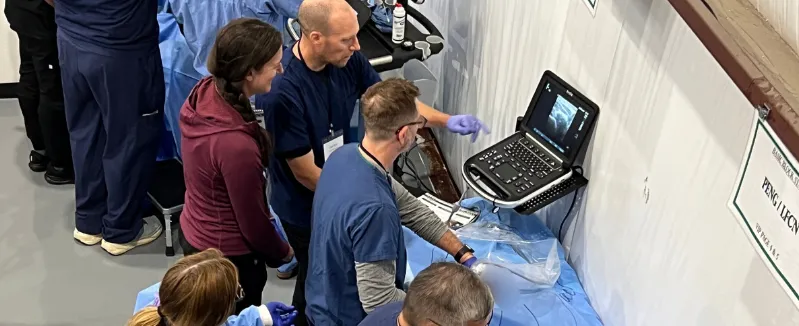
At Maverick Medical Education, we’re committed to training providers in advanced regional techniques like the PENG block, helping CRNAs and SRNAs expand their skill sets, improve patient outcomes, and adapt to the latest evidence-based practices.
Read the full study here: https://www.sciencedirect.com/science/article/abs/pii/S0952818025001825